


Dust monitoring is a broad category. Some providers focus on perimeter and ambient particulate monitoring for construction, mining, and infrastructure projects. Others specialise in occupational exposure, silica, and respirable dust in the breathing zone, while some are better described as consultancies that wrap monitoring, reporting, and compliance support around a managed service.
The providers below reflect the companies supplied for this comparison, and the aim is to compare them in a format that is practical for buyers, specifiers, and health and safety teams.
1. Aeroqual
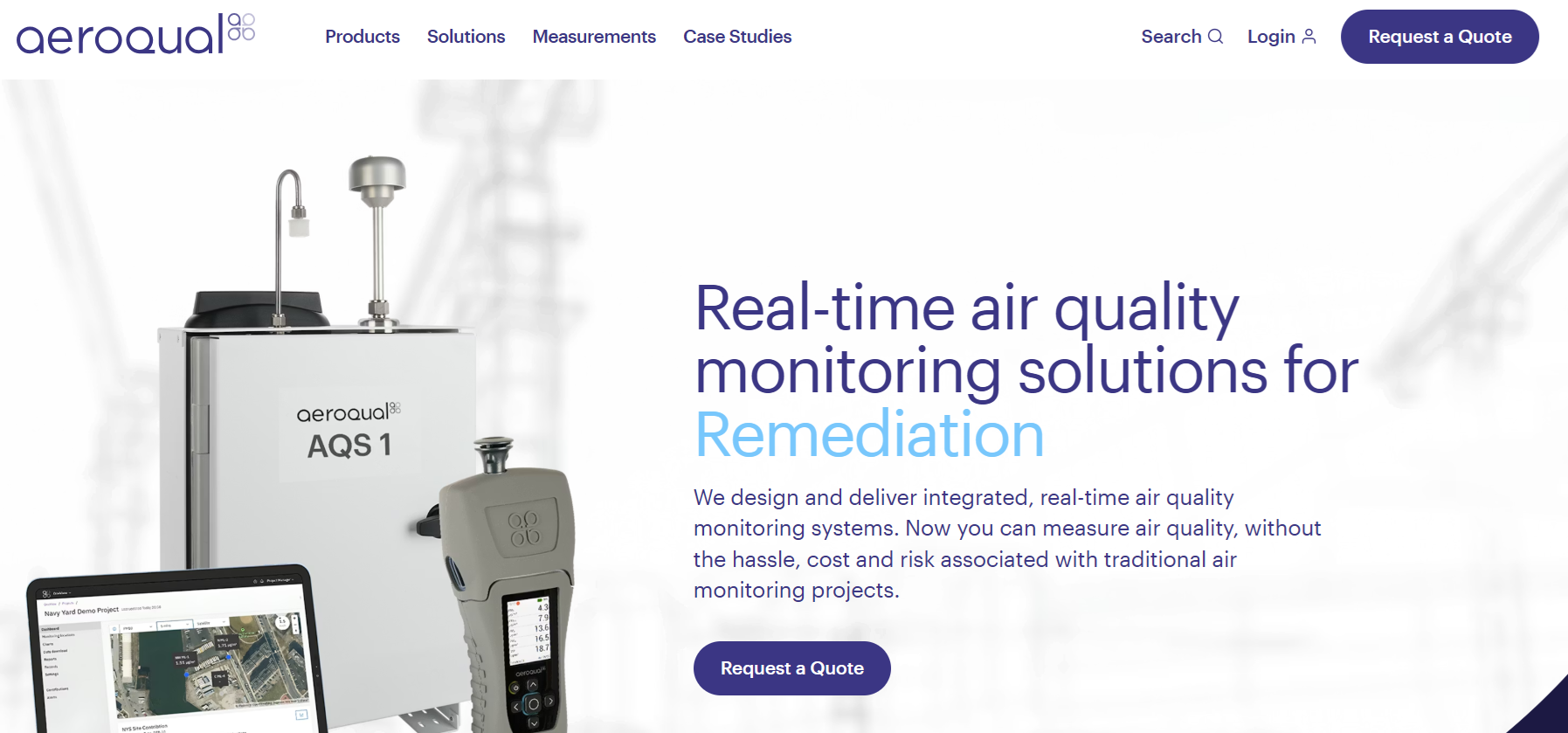
Aeroqual is one of the strongest options in this list for real-time particulate monitoring on construction, redevelopment, and infrastructure projects. Its public materials span fence-line monitors, handheld dust and gas units, cloud software, and dust-control applications, which makes it particularly relevant where PM monitoring needs to be tied to live alerts and fast operational response.
Case study spotlight: Aeroqual’s Wembley City Regeneration case study shows John Sisk & Son using Dust Sentry PM10 monitors to comply with local dust-control guidance, receive live data and alerts, and respond to exceedances before they affected people or the environment. Aeroqual also highlights a 2024 City Rail Link project in New Zealand, where its Ranger monitor was used to measure respirable dust linked to potential silica exposure during concrete cutting, underground excavation, and tunnel construction.
2. Acoem

Acoem sits toward the environmental monitoring end of the market, with solutions that cover ambient air, dust, blast, and broader site monitoring. Its public positioning is strongest where clients need a mix of hardware, calibration, maintenance, remote data capture, and reporting rather than a standalone monitor.
Case study spotlight: In Acoem’s Genesis Minerals case study, the company supported a 12-month baseline dust monitoring plan for the Tower Hill site in Western Australia. The system, commissioned in May 2024, combined PM10 monitoring, meteorological data, calibration, maintenance, remote data capture, and reporting, with the published goal of supporting dust impact modelling and future compliance monitoring as the site moved through expansion planning.
3. Trolex
Trolex is one of the clearest real-time personal dust monitoring specialists in this comparison. Its messaging is focused on worker exposure, silica, connected software, and decision-making in live occupational environments rather than on perimeter nuisance dust alone.
Case study spotlight: Trolex’s AirMatters example shows XD1+ personal dust monitors being used across occupational hygiene projects to generate information that traditional time-weighted average samples could not provide on their own. The published outcome was better visibility into changing dust levels, stronger exposure evaluation, and more informed decisions on PPE and control measures.
4. CEM Solutions

CEM Solutions is the most industrial emissions-focused provider in this list. Its offer is centred on continuous emissions monitoring, permit compliance, data handling, reporting, and MCERTS-certified particulate instrumentation for industrial plant rather than on general construction dust, consultancy-led workplace surveys, or consumer-style portable monitoring.
Case study spotlight: In a Midlands hot-dip galvanising project, CEM Solutions replaced unreliable plant monitoring with an MCERTS-certified PFM20 particulate monitor and its CEMWare reporting platform. The case study positions the solution as a way to restore confidence in emissions data, align the system with permit wording, and simplify reporting for the site team.
5. DustScanAQ
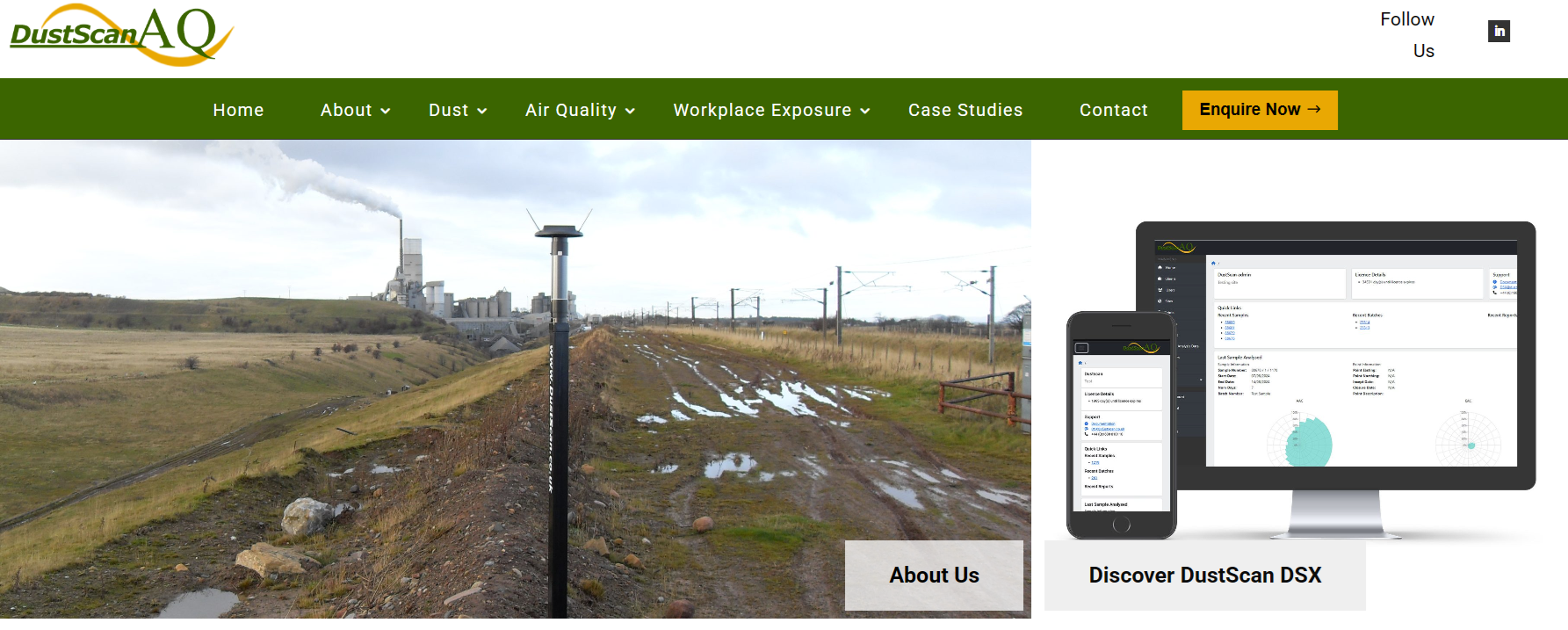
DustScanAQ is one of the strongest construction and planning-focused providers in the group. Its public case study material combines real-time PM monitoring with consultancy, equipment hire, local authority liaison, and reporting, which makes it particularly relevant for developments where dust control is part of a planning condition or planning-risk management strategy.
Case study spotlight: On a 27-unit residential development in Camden, DustScanAQ deployed two MCERTS indicative PM monitors to satisfy a planning condition for real-time particulate monitoring. Alerts were sent to DustScanAQ, the local authority, and the contractor when thresholds were exceeded, while the company also produced compliance reporting during the works.
6. SOCOTEC

SOCOTEC brings a broader environmental consultancy model to dust monitoring, with services spanning nuisance dust monitoring, deposit gauges, baseline surveys, and planning-related support. That breadth is useful for clients who need dust monitoring to sit within a wider environmental, planning, or infrastructure compliance programme rather than as a standalone technical purchase.
Case study spotlight: In one published project with McLaren, SOCOTEC supported a Section 61 application by producing a Dust Management Plan and delivering baseline and real-time environmental monitoring throughout the development. In another rail-sector example, SOCOTEC’s ESG business monitored dust and fumes in Network Rail maintenance units to check whether ventilation systems were effective in limiting worker exposure.
7. Ricardo

Ricardo is the broadest environmental consultancy in this comparison and is less of a dedicated dust hardware supplier than providers such as Aeroqual, Trolex, or CEM Solutions. Its strength lies in air quality network support, data quality, technical assurance, and long-running monitoring partnerships for public-sector and infrastructure clients.
Case study spotlight: Ricardo’s Luton Council case study shows the company providing QA/QC of air quality sensor data, scoping advice, and support for a wider monitoring network that included diffusion tubes and reference monitoring stations. For organisations that value interpretation, validation, and network management as much as sensor deployment, that is a strong proposition.
Final thoughts
The strongest shortlist here depends on the use case. For construction, redevelopment, and perimeter PM monitoring, Aeroqual, Acoem, DustScanAQ, and SOCOTEC stand out most clearly in public materials. For occupational exposure, respirable dust, and silica, Trolex, SKC Ltd, SKC Inc, and Safe Air Quality are more closely aligned. For industrial emissions and permit-led plant monitoring, CEM Solutions is the clearest specialist. Oracle Environmental and Ricardo are particularly relevant where consultancy, reporting, interpretation, and managed delivery matter as much as the monitoring itself.