The Health and Safety Executive (HSE) has issued a reminder to employers across the UK to proactively manage the risks posed by extreme heat to their workforce. This urgent call comes as the UK Health Security Agency (UKHSA) has issued a heat health alert for parts of the country, effective until Tuesday, 23 June. Employers are legally obligated to protect their staff from the dangers of high temperatures.
Regulator urges action as heat health alert issued
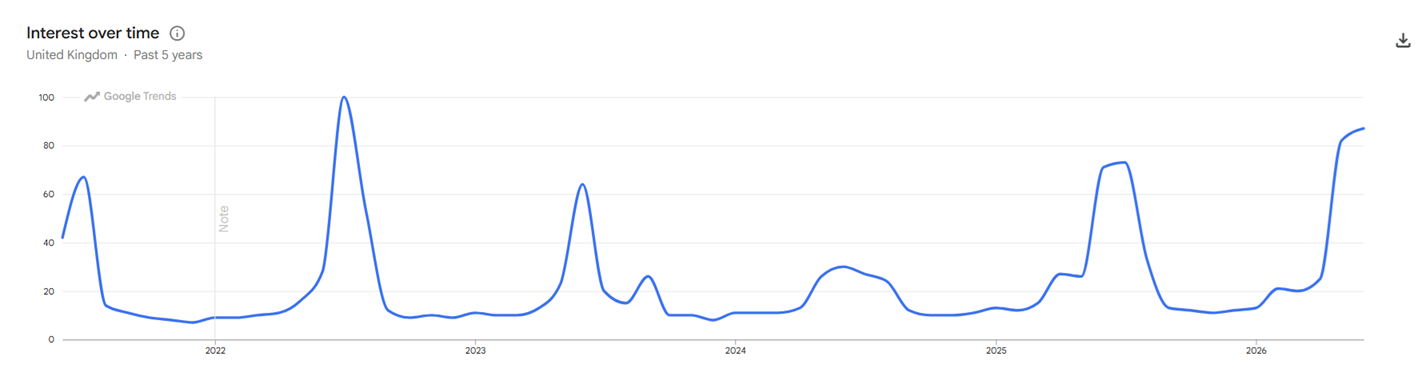
In the UK specifically high temperatures often carry greater risks due to a lack of air conditioning infrastructure, air conditioning searches are at a 4 year high with highest searches on record within google since the last intense heatwave in 2022.
The country’s workplace regulator is observing a increase in requests for advice during periods of hot weather. Following the UKHSA’s alert, the HSE is now strongly encouraging all employers to develop and implement comprehensive plans to support employees working in conditions of extreme heat. This proactive approach is not only vital for safeguarding worker health and safety but also crucial for maintaining overall productivity within businesses.
By law, employers must conduct thorough risk assessments covering the health and safety of their workers, and this mandate explicitly includes risks arising from severe weather phenomena such as heatwaves. While current legislation does not specify a maximum legal working temperature for workplaces, heat is unequivocally classified as a hazard and must be managed with the same diligence as any other workplace danger. The HSE stresses that all workers, irrespective of whether they operate indoors or outdoors, are susceptible to heat-related risks, necessitating open discussions between employers and employees to implement effective risk management strategies.
John Rowe, Deputy Director for Technical Support and Engagement for the Health and Safety Executive, highlighted the lessons from previous summers. “Last summer should have been a wake-up call for all employers,” Mr Rowe stated. “If we continue to experience hotter summers, this could have a significant impact on the workforce of this country, affecting everything from the health of workers to productivity on construction sites.” He underscored the necessity for proper assessment of risks from extreme heat, advocating for practical measures.
Mr Rowe continued, “Practical steps can include providing adequate ventilation and shade and allowing enough breaks for workers to cool down. We provide detailed guidance on our website hse.gov.uk.” The HSE is urging employers to implement a range of simple yet effective measures. These include ensuring workplace windows can be opened or closed to prevent the build-up and circulation of hot air, and using blinds or reflective film on windows to shield workers from direct sunlight. Furthermore, positioning workstations away from direct sunlight and other heat sources, and insulating hot pipes and machinery, can significantly reduce ambient temperatures.
Employers should also consider offering flexible working patterns, enabling staff to work during cooler parts of the day. Providing readily accessible, free drinking water is essential for hydration. Relaxing dress codes where appropriate can help workers stay cooler, and providing weather-appropriate personal protective equipment (PPE) is crucial. Workers should also be encouraged to remove PPE when resting, ideally in shaded areas, to facilitate cooling. Finally, sharing vital information about the symptoms of heat stress and outlining appropriate actions if someone is affected is a key preventative measure.
“We know all employers are under pressure and we don’t want to add to their burden but it’s vital they think hard now about simple and cheap measures they can put in place to support workers should we see extreme heat again this summer,” Mr Rowe concluded, reinforcing the message that effective heat management does not necessarily require costly interventions. These proactive steps are crucial for safeguarding employee well-being and maintaining operational efficiency during periods of high temperatures.
This story was originally published by HSE Media Centre
About the Author:

David leads the content delivery team at HSE Network and handles the day to day management of advertorial and editorial content campaigns. David has experience in safety content creation across written and podcast-based mediums and has been working with HSE Network for over 5 years.